
Scientists using NASA’s IXPE (Imaging X-ray Polarimetry Explorer) directly measured the magnetic fields of PSR J1101−6101, a pulsar located within what is often referred to as the “Lighthouse” Nebula, for the first time.
A pulsar is a type of neutron star — the dense core leftover when a massive star collapses — with a strong magnetic field that spins incredibly fast. The pulsar at the center of the Lighthouse nebula is rotating at 16 times per second.
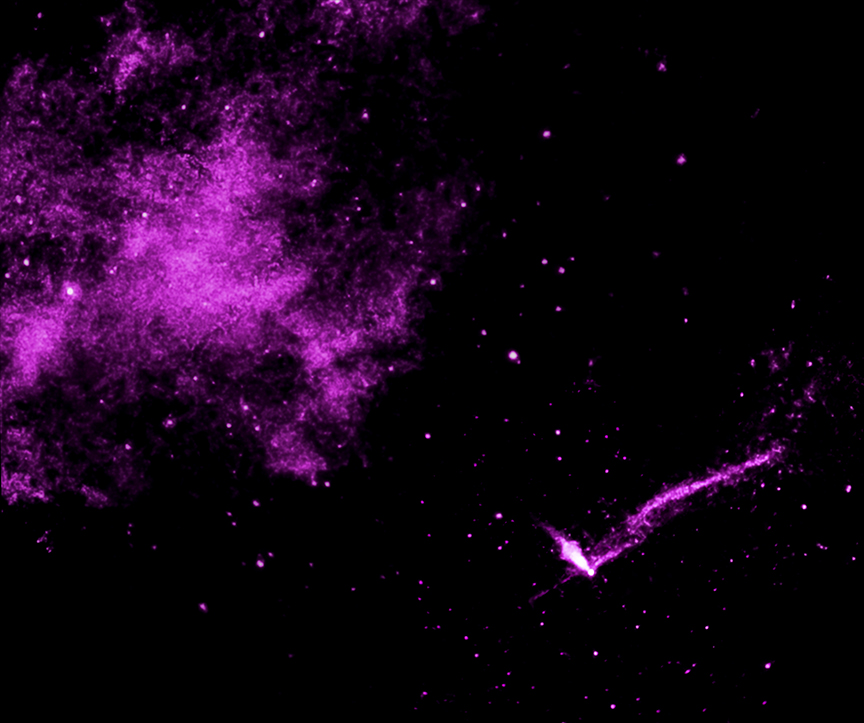
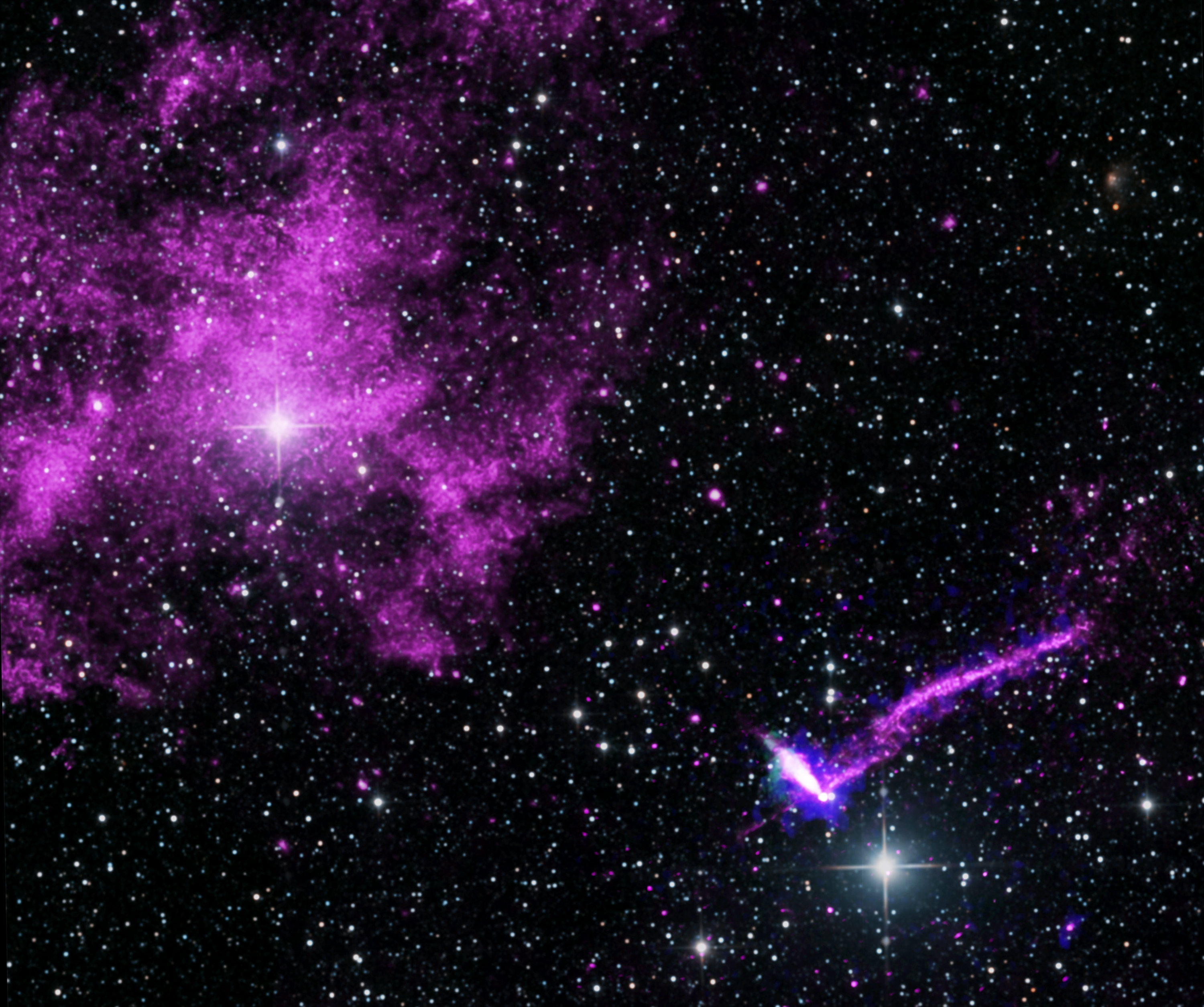
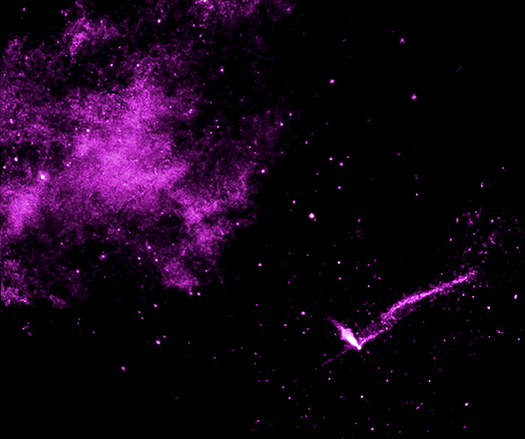
Astronomers studied two narrow offshoots extending from the Lighthouse pulsar to better understand how electrons at nearly the speed of light interact with the surrounding environment. When high-energy particles from the pulsar collide with the gas of interstellar space, they form a bow shock similar to the bow wave formed at the front of a speeding boat. Most particles become trapped behind this bow shock, forming the turbulent tail behind the pulsar. Previously, NASA’s Chandra X-ray Observatory captured this tail that extends for over 37 light-years, the longest jet from an object seen in the Milky Way at the time.
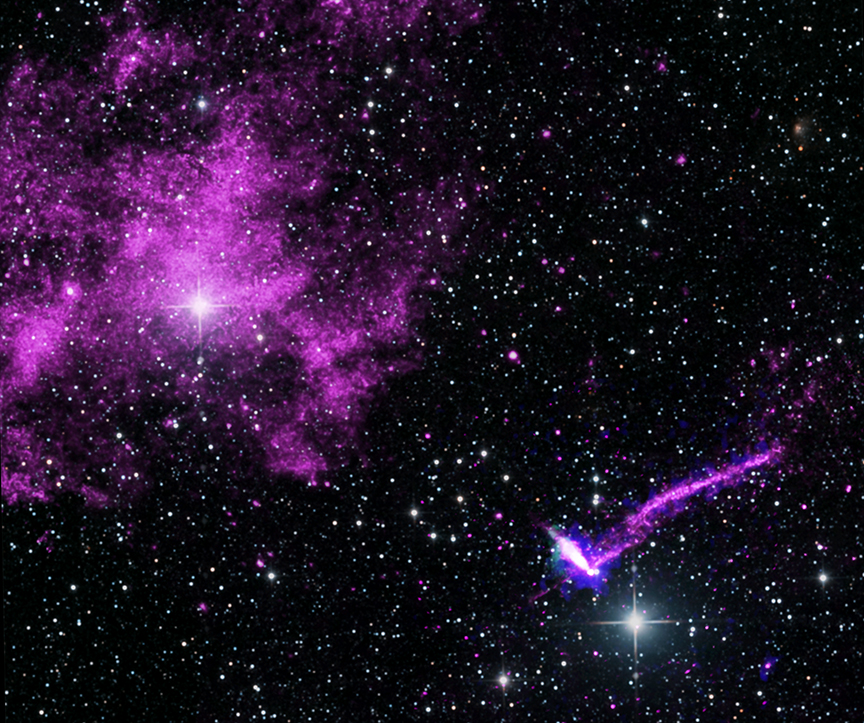
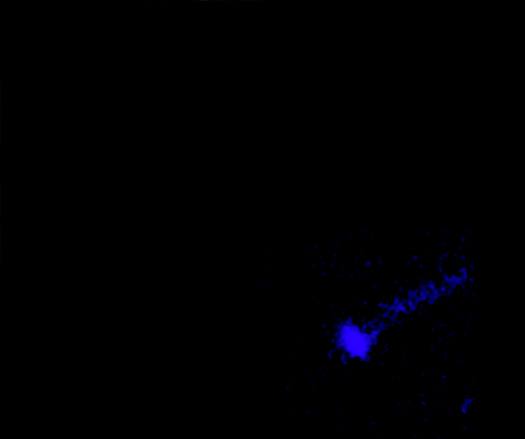
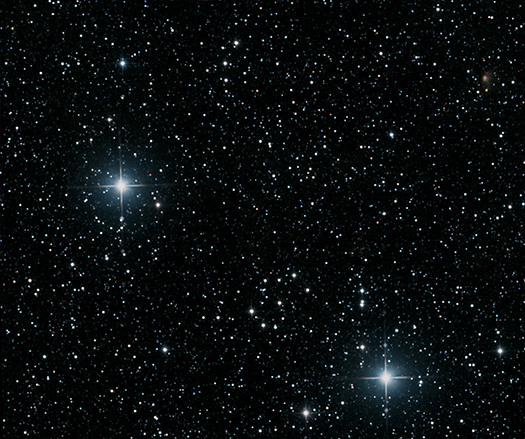
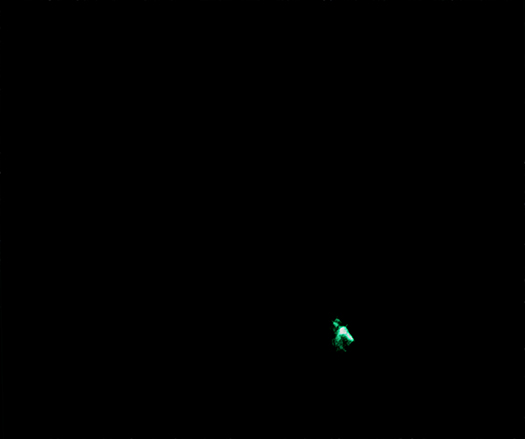
This graphic contains data from different telescopes that shows the region around the Lighthouse pulsar and its wake. In this composite image, X-ray data from NASA’s Chandra X-ray Observatory are purple, X-rays from NASA's IXPE are in blue, with radio emission captured by the Australia Compact Telescope Array in green. Optical light data from the 2MASS telescope shows the stars visible in this field of view.
A paper about the results recently published in the Astrophysical Journal. The IXPE mission, which continues to provide unprecedented data enabling groundbreaking discoveries about celestial objects across the universe, is a joint NASA and Italian Space Agency mission with partners and science collaborators in 12 countries. It is led by NASA’s Marshall Space Flight Center in Huntsville, Alabama. BAE Systems, Inc., headquartered in Falls Church, Virginia, manages spacecraft operations together with the University of Colorado’s Laboratory for Atmospheric and Space Physics in Boulder.
NASA's Marshall Space Flight Center manages the Chandra program. The Smithsonian Astrophysical Observatory's Chandra X-ray Center controls science operations from Cambridge, Massachusetts, and flight operations from Burlington, Massachusetts.
This composite multiwavelength image captures the turbulent environment surrounding the Lighthouse pulsar, set against a vast, black background speckled with twinkling white and faint green stars. In the upper-left quadrant, a massive, cloud-like nebula glows in a textured, vibrant purple hue, anchored by a prominent four-pointed star shining brightly near its center. Moving toward the lower-right quadrant, the pulsar itself is located at the lower tip of a concentrated, brilliant whitish-blue elongated point of light. Extending outward from its core is a long, narrow, and slightly curved jet of purple and blue emission that streaks upward and to the right. This jet represents a massive 37-light-year tail of high-energy particles trailing behind the rapidly spinning star as it plow through interstellar space. This composite image contains X-ray data from NASA's Chandra X-ray Observatory in purple, additional X-ray from NASA's IXPE in blue, and radio data from CSIRO in green. The starfield is optical data from the 2MASS survey.
|
||||||||||||||||||||||||||||||