



















CXC Home | Search | Help | Image Use Policy | Latest Images | Privacy | Accessibility | Glossary | Q&A
1
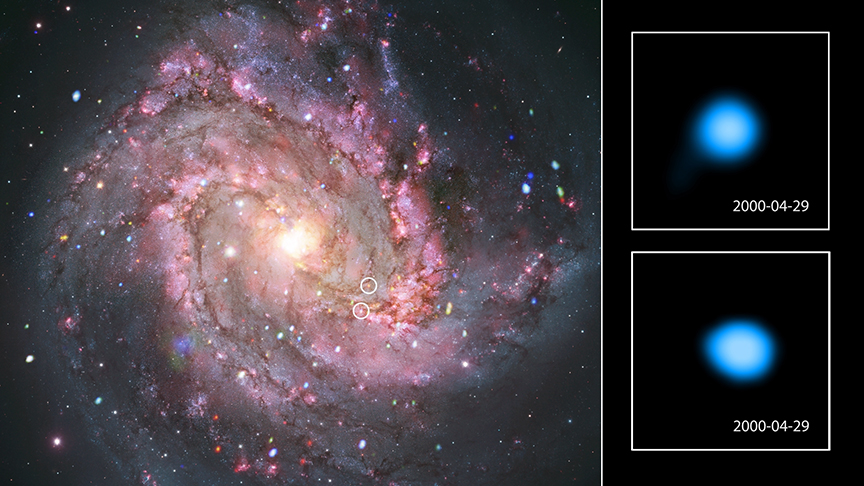
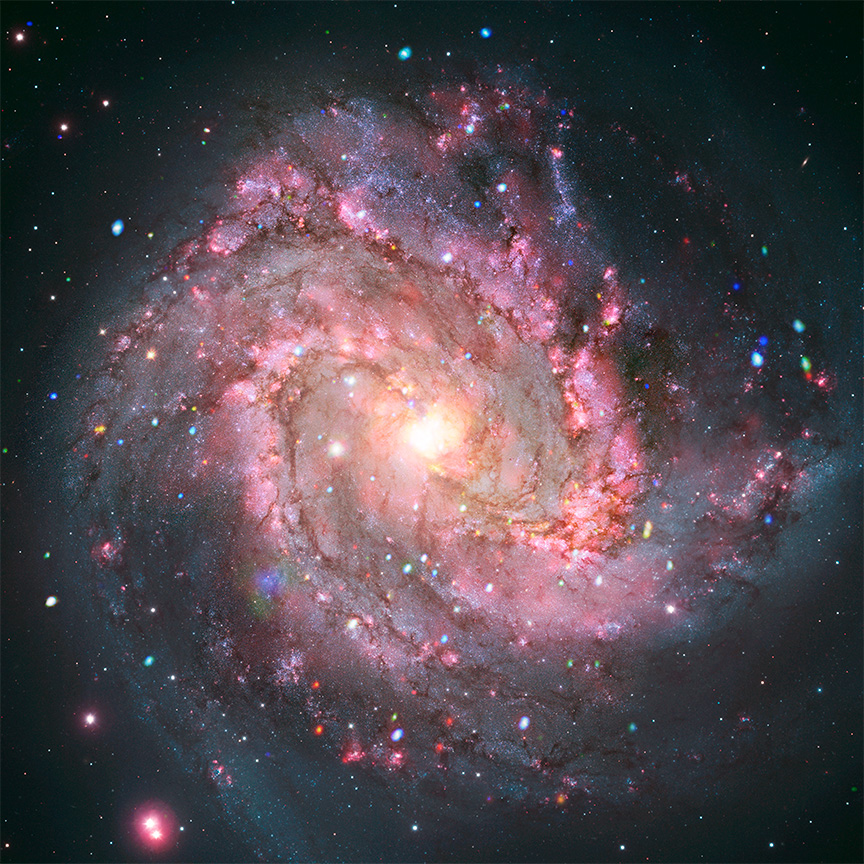
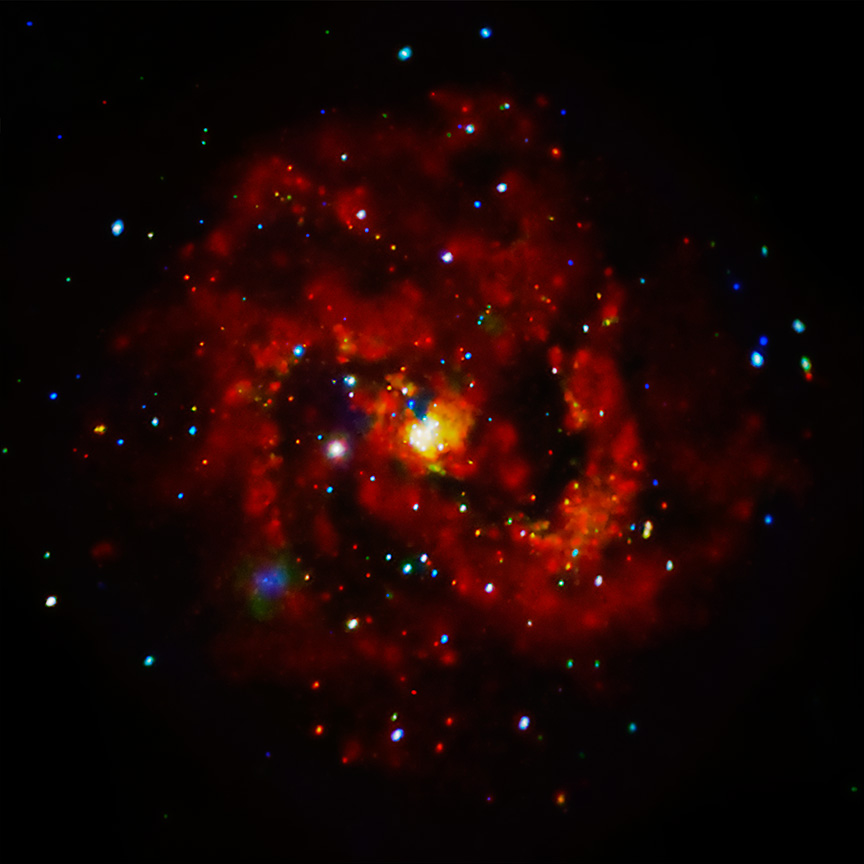
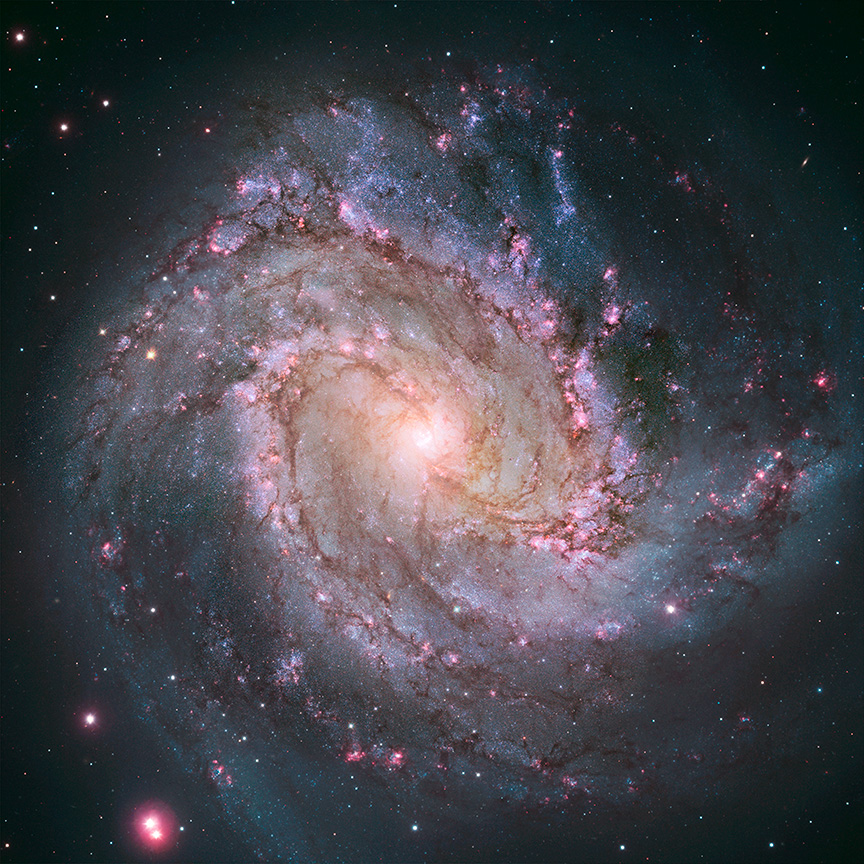
X-ray & Optical Images of M83Credit: X-ray: NASA/CXC/SAO; Optical: NASA/ESA/AURA/STScI, Hubble Heritage Team, W. Blair (STScI/Johns Hopkins University) and R. O'Connell (University of Virginia); Image Processing: NASA/CXC/SAO/A. Jubett, L. Frattare and P. Edmonds
Timelapse Stills, Top Source:
Timelapse Stills, Bottom Source:
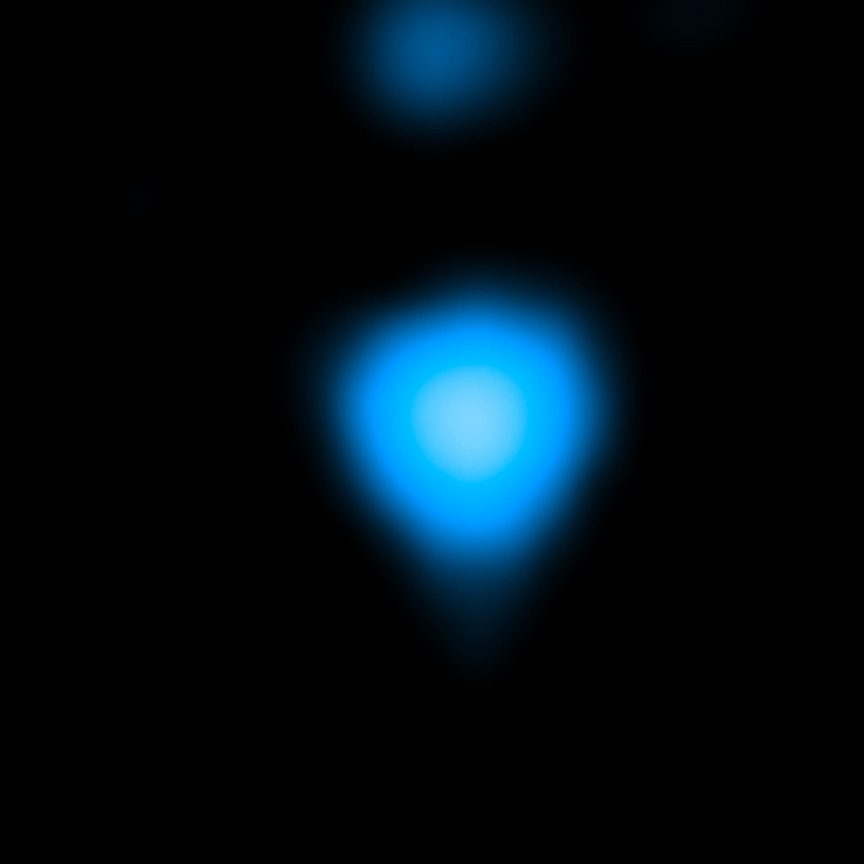
These images show two X-ray sources out of 22 found in the M83 galaxy that are changing their brightness in surprising ways according to Chandra data that spans 14 years. A full field composite image of M83 with X-rays from Chandra (red, green, and blue) and optical light data from Hubble (red, green, and blue) is included. The two varying Chandra sources are shown and included in a close-up timelapse video. The science team’s preferred explanation is these are from a population of stars that lived through their partner's destruction in a supernova explosion.
2
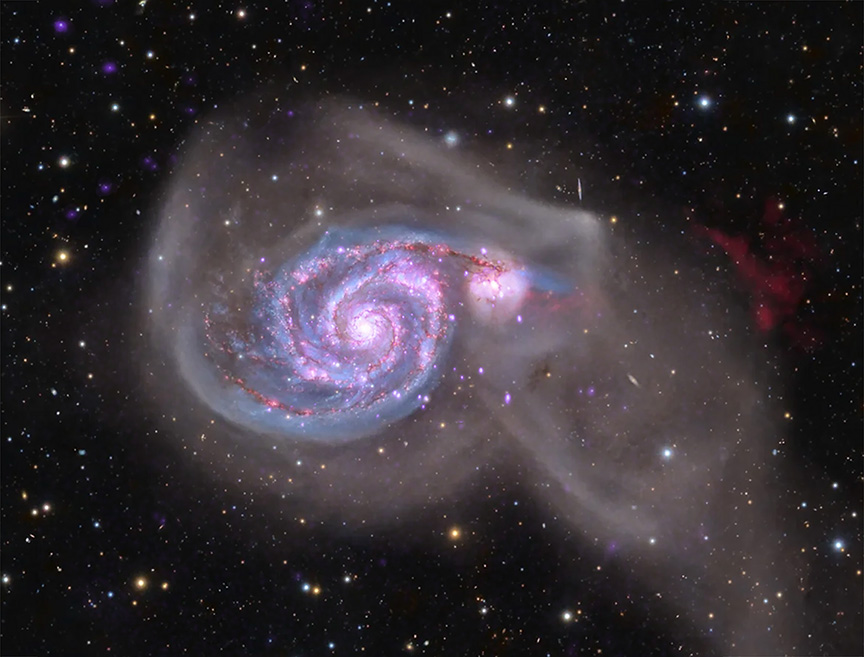
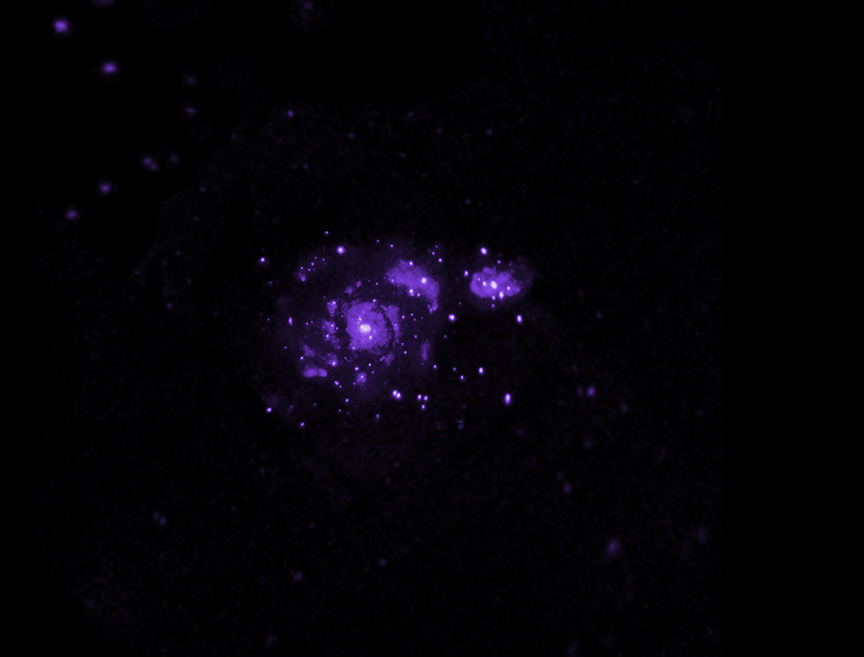
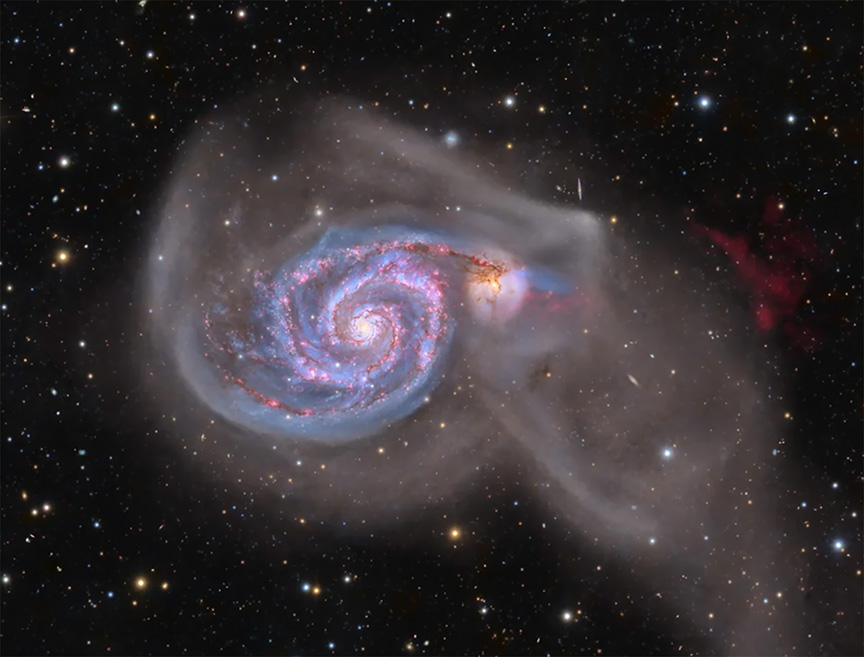
X-ray & Optical Images of M51Credit: Chandra X-ray Data: NASA/CXC/SAO; Astrobin/Optical Groundbased: C.Björk, T.Bähnck, S.Donoso, J.Gentillon, A. and D.Grelin, S.Guberski, R. Hall, T.Heuberger, J.Jacks, P.Kent, Br.Meyers, W.Ostling, N.Puig, T.Schaeffer, F.Schöfbänker, M.Vasilev; Image Processing: NASA/CXC/SAO/L. Frattare
A composite image of the galaxy M51 combining data from NASA's Chandra X-ray Observatory (purple) with optical data (red, green and blue) taken with ground-based telescopes by a team of astrophotographers. A surprisingly high number of X-ray sources associated with supernova remnants in M51 show large changes in brightness, similar to the behavior seen in M83.
3
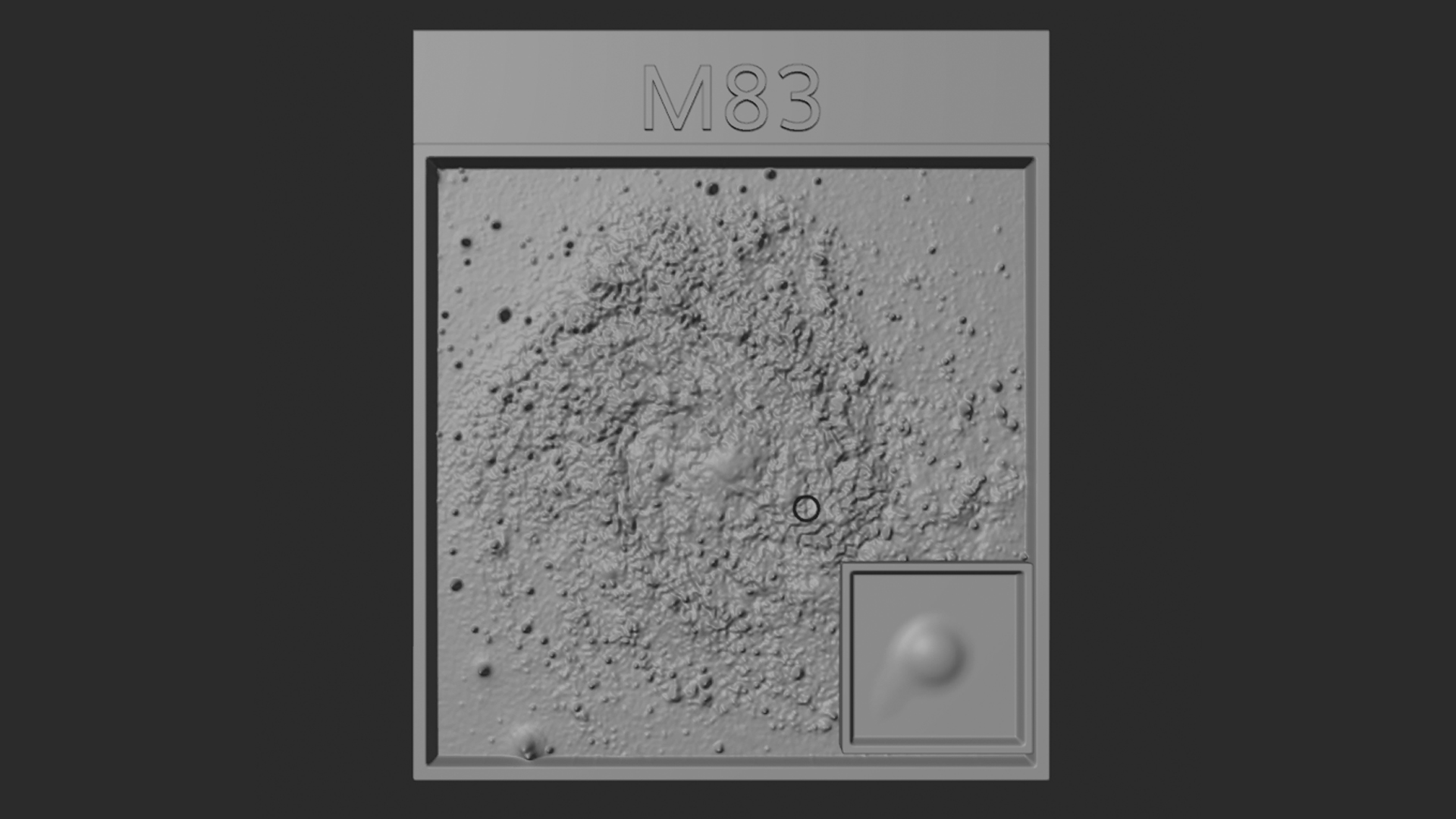
3D Printable Files: M83, with Source (3D Print Credit: NASA/CXC/A. Jubett, using software by Tactile Universe/N. Bonne & C. Krawczyk & Blender)
This tactile plate is a physical relief map based on the intensity of optical & X-ray data, showing the galaxy Messier 83 (or M83), a spiral structure viewed straight on. At the center is a raised pool of light. From that light, spiral arms corkscrew out in wide, sweeping arches. The galaxy is covered in a haze, and flecked with many dots.
One of the tiny dots to the lower right of center is highlighted by a raised circle. This is one of the supernova remnants within M83 being considered by researchers.
Over a 14-year period from 2000 to 2014, astronomers pointed NASA’s Chandra X-ray Observatory at the M83 galaxy. They discovered that about half of the X-ray sources believed to be supernova remnants, the aftermath of stellar explosions, were exhibiting unexpected and dramatic changes in brightness. These sources appear as bright blobs with glowing cores that noticeably change in shape, intensity, and brightness over months or years.
The most likely explanation for these changes in brightness is that the team has uncovered a population of stellar survivors, stars that lived through an orbiting partner’s destruction in a supernova explosion. Material is being pulled from the surviving star onto the black hole or neutron star that formed in the supernova, a process known to cause rapid changes in X-ray brightness.
One of the tiny dots to the lower right of center is highlighted by a raised circle. This is one of the supernova remnants within M83 being considered by researchers.
Over a 14-year period from 2000 to 2014, astronomers pointed NASA’s Chandra X-ray Observatory at the M83 galaxy. They discovered that about half of the X-ray sources believed to be supernova remnants, the aftermath of stellar explosions, were exhibiting unexpected and dramatic changes in brightness. These sources appear as bright blobs with glowing cores that noticeably change in shape, intensity, and brightness over months or years.
The most likely explanation for these changes in brightness is that the team has uncovered a population of stellar survivors, stars that lived through an orbiting partner’s destruction in a supernova explosion. Material is being pulled from the surviving star onto the black hole or neutron star that formed in the supernova, a process known to cause rapid changes in X-ray brightness.
4
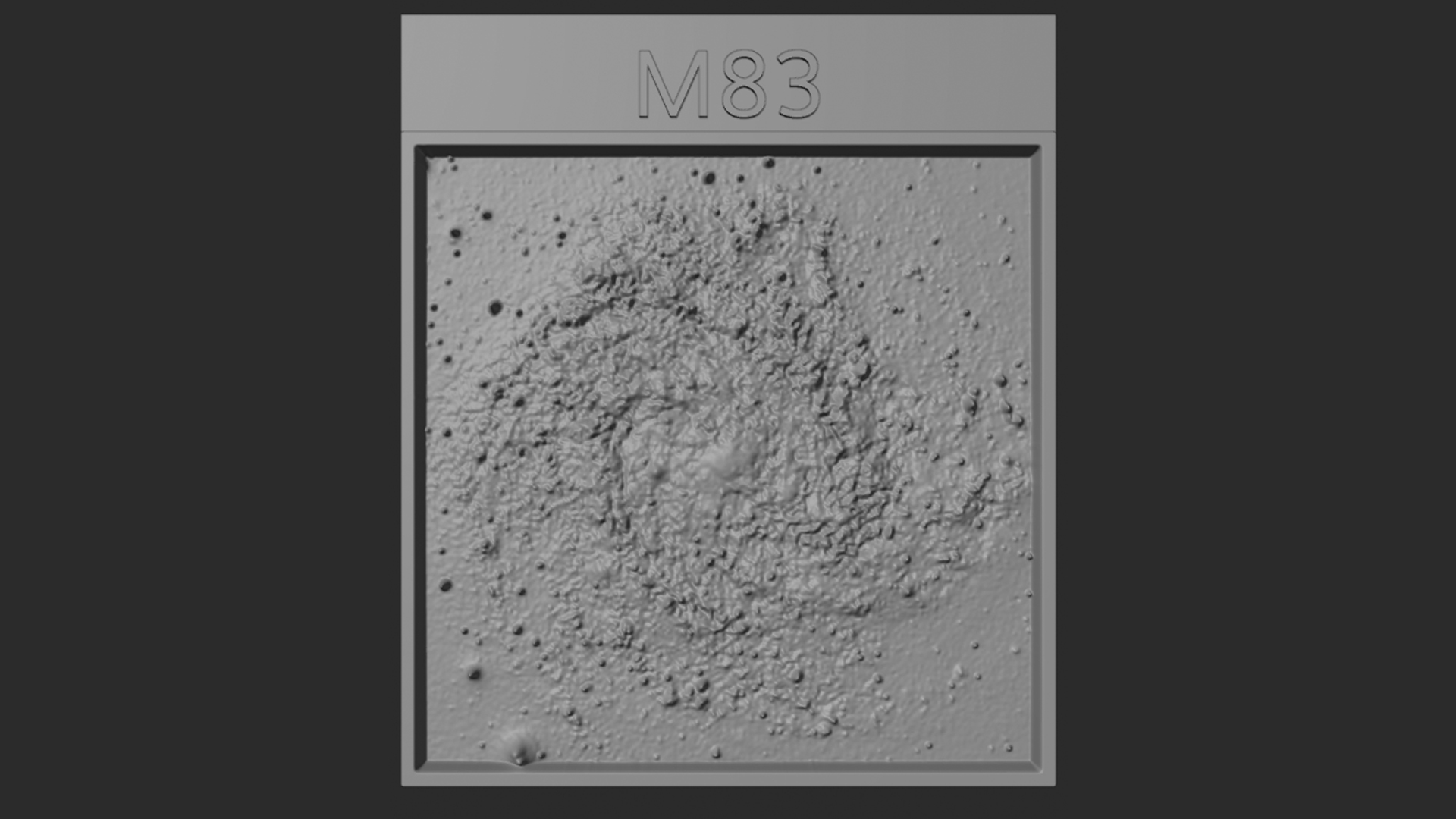
3D Printable Files: M83, Galaxy Only (3D Print Credit: NASA/CXC/A. Jubett, using software by Tactile Universe/N. Bonne & C. Krawczyk & Blender)
This tactile plate is a physical relief map based on the intensity of optical & X-ray data, showing the galaxy Messier 83 (or M83), a spiral structure viewed straight on. At the center is a raised pool of light. From that light, spiral arms corkscrew out in wide, sweeping arches. The galaxy is covered in a haze, and flecked with many dots.
Return to: NASA's Chandra Finds Unexpected Fireworks in Aftermath of Stellar Explosions (June 15, 2026)


Revised: June 24, 2026