


CXC Home | Search | Help | Image Use Policy | Latest Images | Privacy | Accessibility | Glossary | Q&A
1
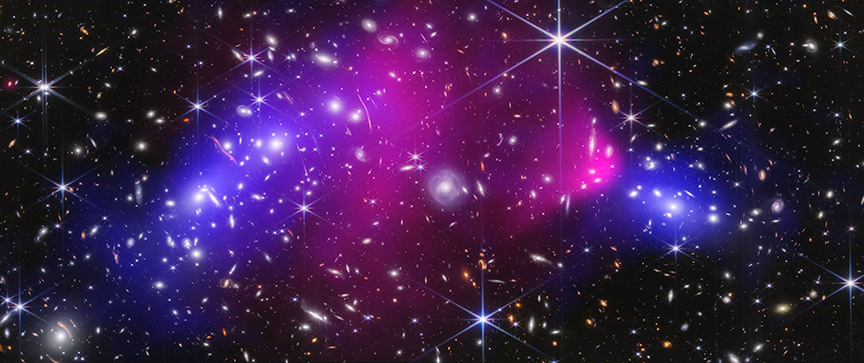
X-ray and Near-infrared Images of the Bullet ClusterCredit: X-ray: NASA/CXC/SAO; Near-infrared: NASA/ESA/CSA/STScI; Image processing: NASA/STScI/J. DePasquale
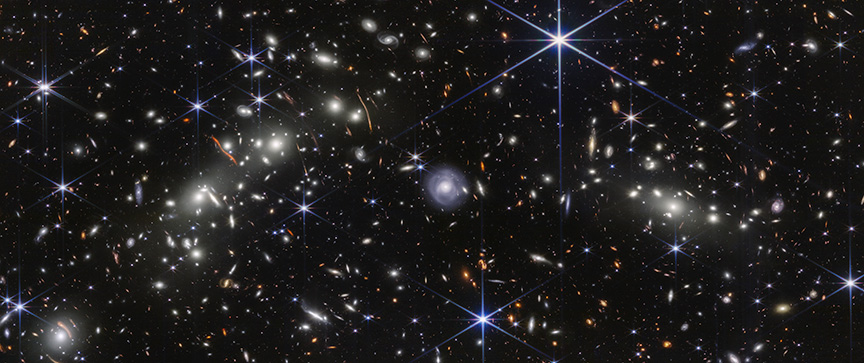
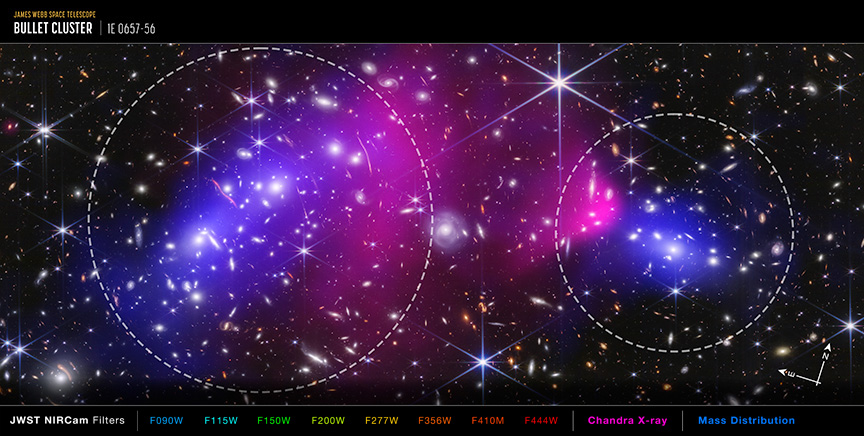
This is the central region of the Bullet Cluster, which is made up of two massive galaxy clusters. The vast number of galaxies and foreground stars in the image were captured by NASA’s James Webb Space Telescope in near-infrared light. Glowing, hot X-rays captured by NASA’s Chandra X-ray Observatory appear in pink. The blue represents the dark matter, which was precisely mapped by researchers with Webb’s detailed imaging. Normally, gas, dust, stars, and dark matter are combined into galaxies, even when they are gravitationally bound within larger groups known as galaxy clusters. The Bullet Cluster is unusual in that the intracluster gas and dark matter are separated, offering further evidence in support of dark matter.
1
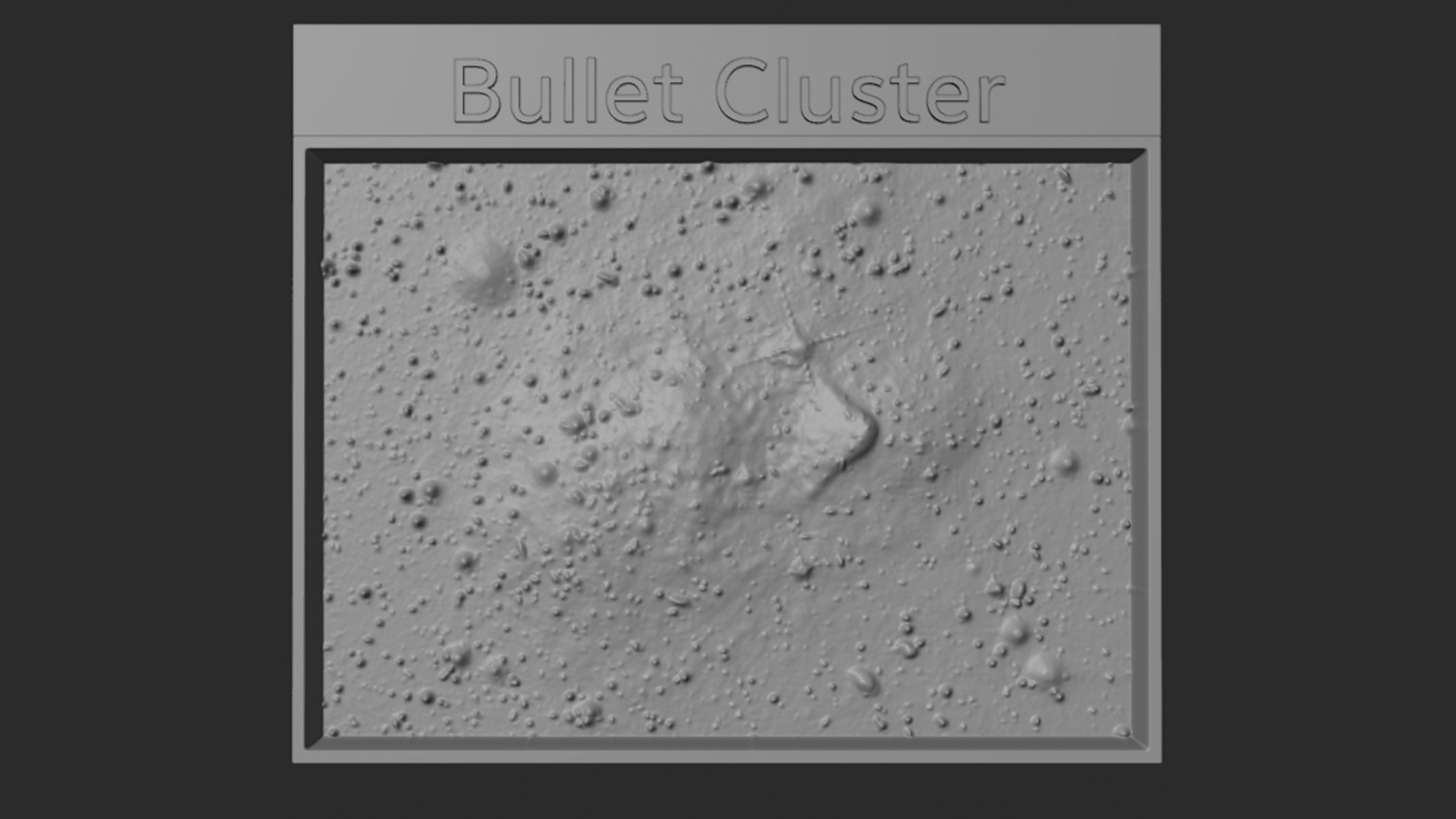
3D Printable Files: Bullet Cluster(3D Print Credit: NASA/CXC/A. Jubett, using software by Tactile Universe/N. Bonne & C. Krawczyk & Blender)
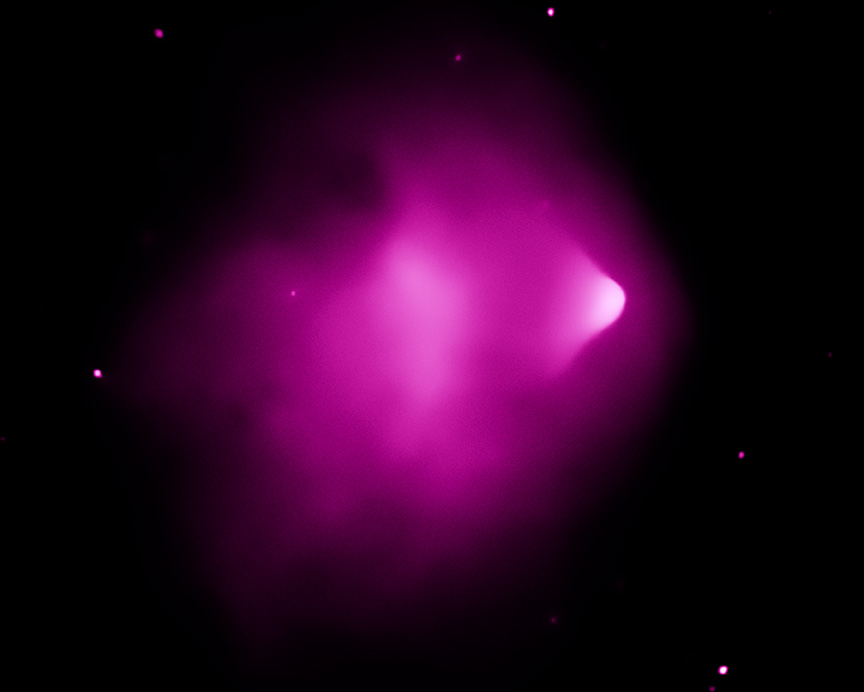
This tactile plate is a physical relief map based on the intensity of Chandra X-ray data along with lensing and optical data featuring the Galaxy Cluster 1E 0657-56, known as the Bullet Cluster. The galaxy cluster is composed of hundreds of galaxies that are held together by their mutual gravitational attraction. In the plate, we can touch a large number of dots and tiny spiral shapes scattered across a plain background. These sources represent individual galaxies within the cluster. The most prominent feature of the plate is the large puffy object in the center overlaying dozens and dozens of the galaxies, which is more concentrated and is shaped like a very large bullet. The bullet-shaped clump on the right side is the hot gas from one cluster, which passed through the hot gas from the other larger cluster during the collision. On either side of the large bullet are other cloudy areas where astronomers find most of the mass in the clusters. The concentration of mass is determined using the effect of so-called gravitational lensing, where light from distant objects is distorted by intervening matter. Most of the matter in the clusters is separate from the normal matter, giving direct evidence that nearly all of the matter in the clusters is dark matter.
Return to: New Image from NASA's Webb and Chandra 'Pierces' Bullet Cluster (June 9, 2025)


Revised: February 12, 2026