

Sequence Showing Evidence of Black Hole Swarm in Context
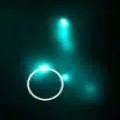
QuickTime MPEG The first image in this sequence is Chandra's 900- by 400-light year mosaic of the Milky Way's center. Next, the view zooms into a smaller region where Chandra has found some 2,000 individual X-ray sources. Finally, Chandra's view of the area immediately surrounding Sagittarius A* (Sgr A*), the Milky Way's supermassive black hole, is shown. As part of a long-term monitoring program, Chandra found several variable X-ray sources. This variability suggests these sources are in systems containing their own stellar-sized black holes.
[Run Time: 1:02]
(Credits:
Galactic Center Mosaic: NASA/UMass/D.Wang et al.
Sagittarius A*: NASA/CXC/MIT/F.K.Baganoff et al.
Galactic Center X-ray Binaries: NASA/CXC/UCLA/M.Muno et al.)
QuickTime MPEG The first image in this sequence is Chandra's 900- by 400-light year mosaic of the Milky Way's center. Next, the view zooms into a smaller region where Chandra has found some 2,000 individual X-ray sources. Finally, Chandra's view of the area immediately surrounding Sagittarius A* (Sgr A*), the Milky Way's supermassive black hole, is shown. As part of a long-term monitoring program, Chandra found several variable X-ray sources. This variability suggests these sources are in systems containing their own stellar-sized black holes.
[Run Time: 1:02]
(Credits:
Galactic Center Mosaic: NASA/UMass/D.Wang et al.
Sagittarius A*: NASA/CXC/MIT/F.K.Baganoff et al.
Galactic Center X-ray Binaries: NASA/CXC/UCLA/M.Muno et al.)

Time-lapse Movie of Galactic Center X-ray Binaries
QuickTime MPEG This sequence of 5 images is part of an ongoing Chandra program that monitors a region around the Milky Way's supermassive black hole, Sgr A*. Four bright, variable X-ray sources were discovered within 3 light years of Sgr A*. The variability is indicative of an X-ray binary system where a black hole or neutron star is pulling matter from a nearby companion star. Such a high concentration of X-ray binaries in this region is strong circumstantial evidence that a dense swarm of 10,000 or more stellar-mass black holes and neutron stars has formed around Sgr A*. The swarm likely formed as stellar-mass black holes, and to a lesser extent, neutron stars, gradually sank toward the center of the Galaxy over the course of several billion years.
[Run Time: 1:02]
(Credits: NASA/CXC/UCLA/M.Muno et al.)
QuickTime MPEG This sequence of 5 images is part of an ongoing Chandra program that monitors a region around the Milky Way's supermassive black hole, Sgr A*. Four bright, variable X-ray sources were discovered within 3 light years of Sgr A*. The variability is indicative of an X-ray binary system where a black hole or neutron star is pulling matter from a nearby companion star. Such a high concentration of X-ray binaries in this region is strong circumstantial evidence that a dense swarm of 10,000 or more stellar-mass black holes and neutron stars has formed around Sgr A*. The swarm likely formed as stellar-mass black holes, and to a lesser extent, neutron stars, gradually sank toward the center of the Galaxy over the course of several billion years.
[Run Time: 1:02]
(Credits: NASA/CXC/UCLA/M.Muno et al.)
Return to Galactic Center X-ray Binaries (10 Jan 05)




Revised: April 22, 2020