

1
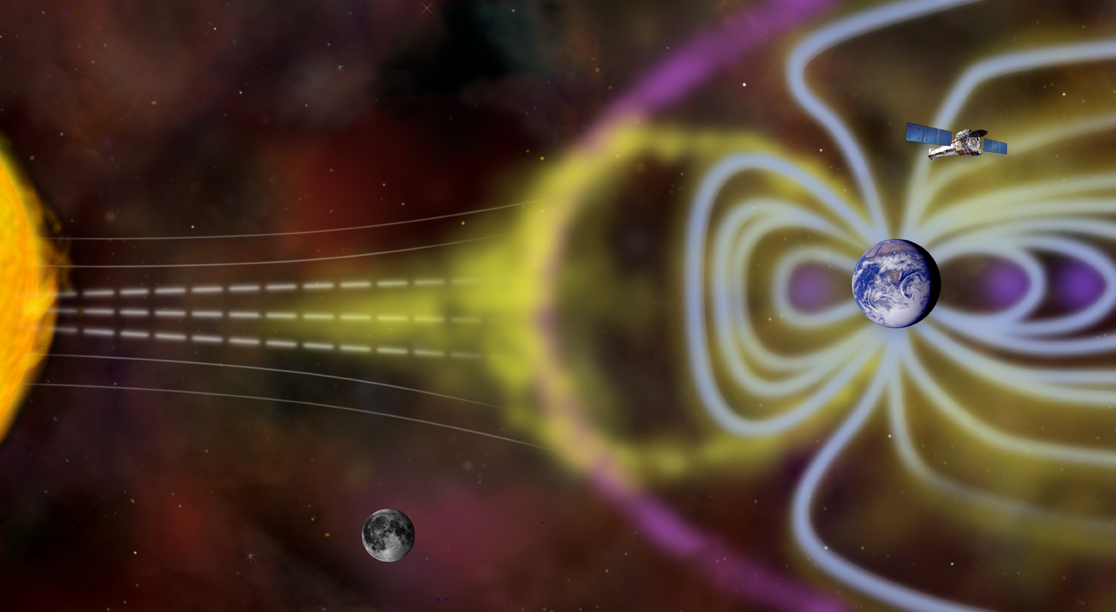
Illustration of Earth's Geocorona
When observing the Moon or other objects, Chandra must look through the Earth's geocorona. Collisions of particles from the Sun with atoms in the geocorona produce a faint background of X-rays. This artist's illustration shows the approximate configuration when Chandra observed the Moon in 2001 [not to scale].
(Credit: NASA/NASA/CXC/M.Weiss)
When observing the Moon or other objects, Chandra must look through the Earth's geocorona. Collisions of particles from the Sun with atoms in the geocorona produce a faint background of X-rays. This artist's illustration shows the approximate configuration when Chandra observed the Moon in 2001 [not to scale].
(Credit: NASA/NASA/CXC/M.Weiss)
2
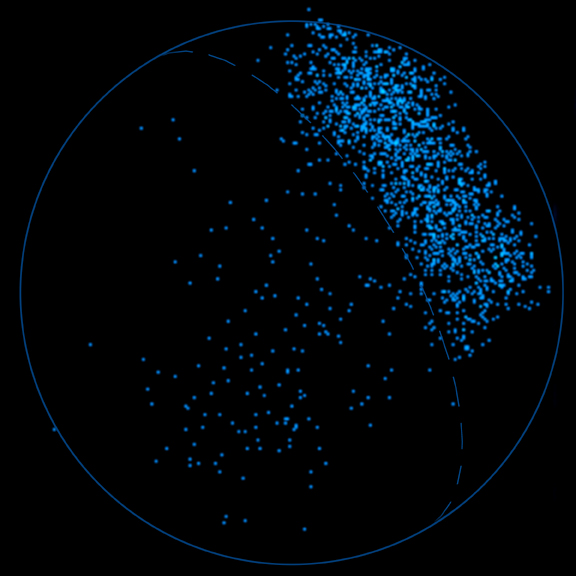
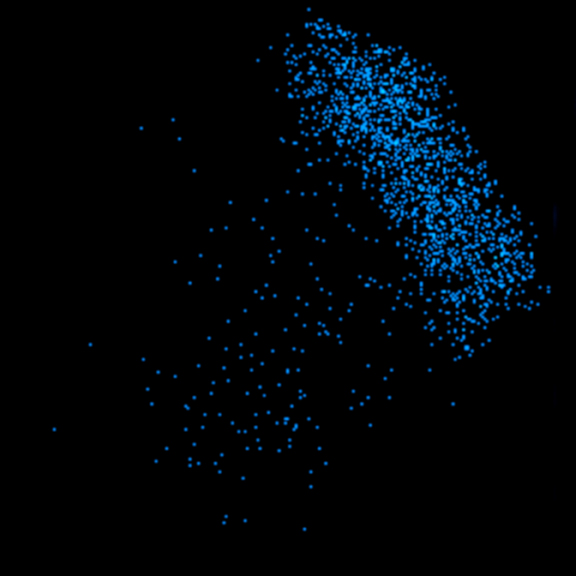
Chandra X-ray Image of the Moon
The Chandra observations of the bright portion of the Moon detected X-rays from oxygen, magnesium, aluminum and silicon atoms. The X-rays are produced by fluorescence when solar X-rays bombard the Moon's surface. Note that because of the Chandra viewing angle during its observation, the optical image (shown below) is rotated a few degrees from the X-ray image.
Scale: Radius is about 17 arcmin.
(Credit: NASA/CXC/SAO/J.Drake et al.)
The Chandra observations of the bright portion of the Moon detected X-rays from oxygen, magnesium, aluminum and silicon atoms. The X-rays are produced by fluorescence when solar X-rays bombard the Moon's surface. Note that because of the Chandra viewing angle during its observation, the optical image (shown below) is rotated a few degrees from the X-ray image.
Scale: Radius is about 17 arcmin.
(Credit: NASA/CXC/SAO/J.Drake et al.)
3

Optical Image of the Moon
Earth's single natural satellite, the Moon, is slightly larger than one quarter the size of the Earth (3,474 km diameter). The Moon doesn't produce its own optical light, but shines by reflected light of the Sun. The portion of the moon shown matches the phase of the moon at the time of the Chandra observation. Note that because of the Chandra viewing angle during its observation, the optical image is rotated a few degrees from the Chandra X-ray image (shown above).
Scale: Radius is about 17 arcmin.
(Credit: Robert Gendler)
Earth's single natural satellite, the Moon, is slightly larger than one quarter the size of the Earth (3,474 km diameter). The Moon doesn't produce its own optical light, but shines by reflected light of the Sun. The portion of the moon shown matches the phase of the moon at the time of the Chandra observation. Note that because of the Chandra viewing angle during its observation, the optical image is rotated a few degrees from the Chandra X-ray image (shown above).
Scale: Radius is about 17 arcmin.
(Credit: Robert Gendler)
4
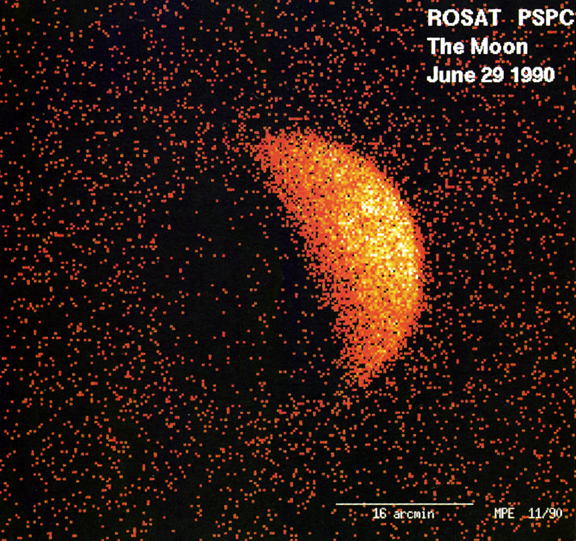
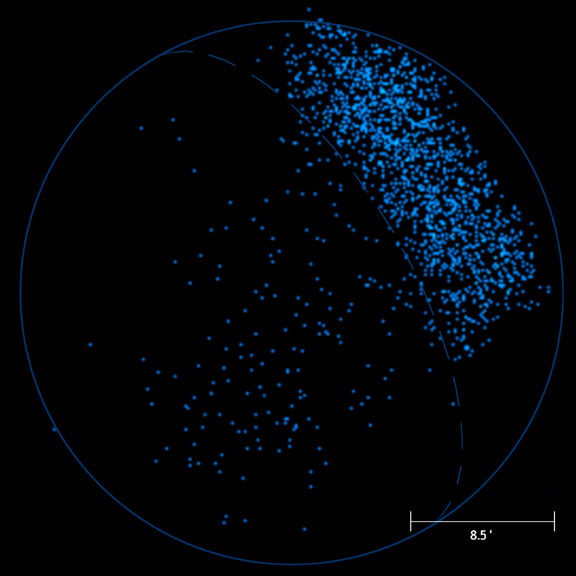
ROSAT X-ray Image of the Moon
This image was taken by ROSAT in June of 1990 when the Moon was about half-full. Chandra's observations of the Moon solved a decade-long mystery about X-rays detected by ROSAT that were thought to be coming from the dark portion of the Moon. It turns out that these X-rays only appear to come from the Moon and can be explained by radiation from Earth's geocorona.
(Credit: ROSAT/J. Schmitt et al.)
This image was taken by ROSAT in June of 1990 when the Moon was about half-full. Chandra's observations of the Moon solved a decade-long mystery about X-rays detected by ROSAT that were thought to be coming from the dark portion of the Moon. It turns out that these X-rays only appear to come from the Moon and can be explained by radiation from Earth's geocorona.
(Credit: ROSAT/J. Schmitt et al.)
5
Return to The Moon (16 Sep 03)




Revised: May 17, 2022