An overview of the Chandra mission and goals, Chandra's namesake, top 10 facts.
Classroom activities, printable materials, interactive games & more.
Overview of X-ray Astronomy and X-ray sources: black holes to galaxy clusters.
All Chandra images released to the public listed by date & by category
Current Chandra press releases, status reports, interviews & biographies.
A collection of multimedia, illustrations & animations, a glossary, FAQ & more.
A collection of illustrations, animations and video.
Chandra discoveries in an audio/video format.
Disclaimer: This material is being kept online for historical purposes. Though accurate at the time of publication, it is no longer being updated. The page may contain broken links or outdated information, and parts may not function in current web browsers. Visit chandra.si.edu for current information.
Riccardo Giacconi: A High-Energy Visionary Wins Nobel Prize
by WKT
October 8, 2002 ::
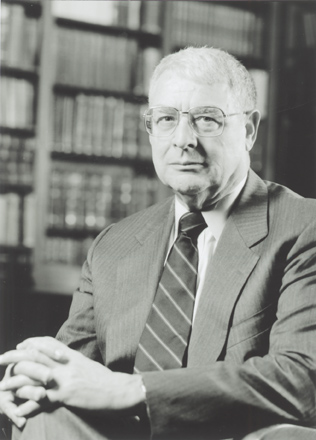
Riccardo Giacconi |

NASA's Uhuru |
The
Einstein X-ray Observatory |
The Chandra team was thrilled by the news that Riccardo Giacconi will be
a recipient of the Nobel Prize in Physics for 2002 "for pioneering contributions to astrophysics, which have led to the discovery of cosmic X-ray sources."
Giacconi's vision, intellect, and ability to inspire others led directly
to the Chandra X-ray Observatory and to the legions of X-ray astronomers
who now explore the high-energy universe. Justly called "the father of X-ray astronomy," Giacconi and his team discovered the first cosmic
X-ray source in 1962, then proposed, designed and directed NASA's Uhuru
X-ray satellite which found the first evidence for a black hole. The
Einstein X-ray Observatory, the first imaging X-ray telescope, was also
a product of Giacconi's team.

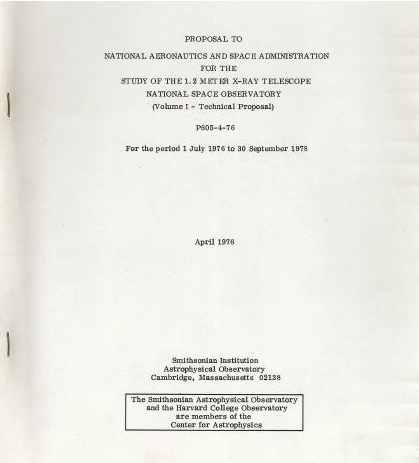
Proposal to NASA |
In 1976, Giacconi along with Harvey Tananbaum, now director of the
Chandra X-ray Center, submitted a proposal letter to NASA that began the
process that led to the development of the Chandra X-ray Observatory.
|
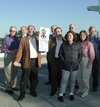
High-Energy Celebration
Members of the Chandra team at the Smithsonian Astrophysical Observatory who had worked or trained with Riccardo Giacconi hold an impromptu gathering to celebrate the Nobel Prize announcement |
Disclaimer: This material is being kept online for historical purposes. Though accurate at the time of publication, it is no longer being updated. The page may contain broken links or outdated information, and parts may not function in current web browsers. Visit chandra.si.edu for current information.