Disclaimer: This material is being kept online for historical purposes. Though accurate at the time of publication, it is no longer being updated. The page may contain broken links or outdated information, and parts may not function in current web browsers. Visit chandra.si.edu for current information.
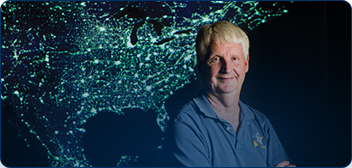 |
Where Are They Now? Steve Hawley
Steve Hawley was the flight engineer on the STS-93 Columbia mission that carried Chandra into space in 1999. |
At a recent symposium celebrating 15 years of Chandra Science, Steve sat down over breakfast to talk about his illustrious career so far, and plans for the future.Full Story |

[more]


"; print "$title"; print ""; } ?>


Take Chandra anywhere! Just download Chandra Podcasts to your portable MP3 player and go. Now playing:


G299.2-2.9: A supernova remnant in the Milky Way about 16,000 light years from Earth. Download Desktop.

On April 20, 2014, Harvey Tananbaum stepped down after 23 years as director of the Chandra X-ray Center (CXC). Full Story.

On April 18, 1998, NASA announced a contest to name the Advanced X-ray Astrophysics Facility (AXAF), which was scheduled for launch in December of that year.Full Story.

Less than 50 years after the first detection of an extrasolar X-ray source, the Chandra X-ray Observatory has achieved an increase in sensitivity comparable to going from naked-eye observations to the most powerful optical telescopes over the past 400 years.Full Story.

![<?=$img_output['objectName']?>](/photo/<?=$img_output['imageReleaseYear']?>/<?=$img_output['imageReleaseDirName']?>/<?=$img_output['imagePrefix']?>_thm45.jpg)




An overview of the Chandra mission and goals, Chandra's namesake, top 10 facts.
Classroom activities, printable materials, interactive games & more.
Overview of X-ray Astronomy and X-ray sources: black holes to galaxy clusters.
All Chandra images released to the public listed by date & by category
Current Chandra press releases, status reports, interviews & biographies.
A collection of multimedia, illustrations & animations, a glossary, FAQ & more.
 |
Help | Site Map | Image Use Polcy | Privacy | Accessibility | Downloads & Plugins | Glossary | Q & A


Contact us: cxcpub@cfa.harvard.edu
Harvard-Smithsonian Center for Astrophysics
60 Garden Street, Cambridge, MA 02138 USA
Phone: 617.496.7941 Fax: 617.495.7356
Harvard-Smithsonian Center for Astrophysics
60 Garden Street, Cambridge, MA 02138 USA
Phone: 617.496.7941 Fax: 617.495.7356
Chandra X-ray Center, Operated for NASA by
the Smithsonian Astrophysical Observatory
This site was developed with funding from NASA under contract NAS8-03060.
the Smithsonian Astrophysical Observatory
This site was developed with funding from NASA under contract NAS8-03060.
